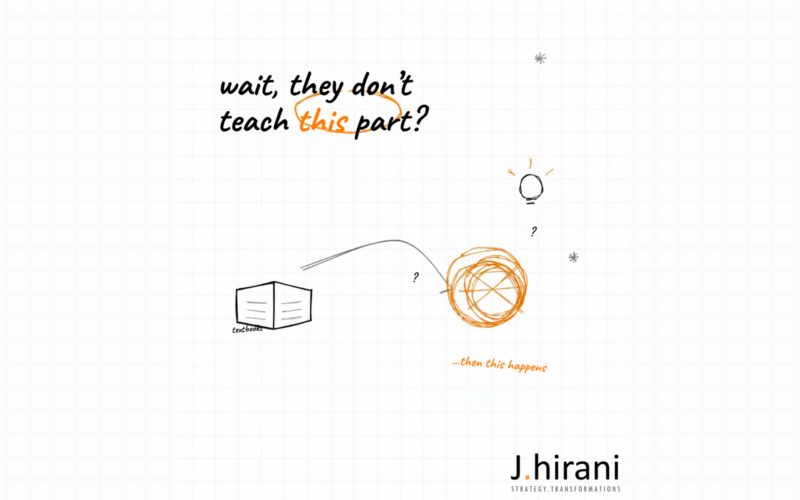
When I started working as a fresher, I thought the biggest challenge would be applying what I had learned from textbooks to the real world.
I was wrong.
The bigger challenge was understanding why I was doing something in the first place.
When I joined an Organization as a Business Analyst and was introduced to a completely new working environment. My first project involved an Aggarbatti brand, where I started working on salesperson visits, distributor performance, retailer coverage, sales targets versus actuals, new retailer additions, and territory performance.
My days quickly became a combination of numbers, Excel sheets, reports, and more Excel.
At first, I could understand what the reports were showing. What I struggled with was understanding why we were tracking all these things and how they would actually make a difference to the business.
There were other challenges too. Communicating with people in the field was not always easy because of the language barrier. I was also new to working with different people and managing multiple tasks at the same time.
The change started happening during our monthly meetings.
I began to see that these reports were not just numbers that had to be prepared and presented. They were a way of keeping track of what was happening on the ground. They helped identify gaps, understand performance, plan activities, coordinate with people, and decide where attention was required.
That was probably my first real lesson in business analysis a report is useful only when it helps someone understand what needs to be done.
Alongside understanding the business, I was also learning how to manage myself.
In the beginning, whenever a task was assigned to me, my first thought was simply, “I need to finish it.” I would take up work without thinking enough about what needed to be done first.
That sometimes meant spending too much time on one thing, taking on more work than I could manage, and making mistakes that could have been avoided.
I slowly realised that being productive isn’t about taking up everything that comes your way. It is about knowing what deserves your attention first.
Scheduling and prioritising became important parts of my routine. They helped me organise my day, keep track of pending work, and, most importantly, make better decisions about where to spend my time.
But perhaps my biggest learning came from something even simpler: communication.
I realised that you cannot keep every piece of information to yourself and expect a team to work efficiently. If something changes, people need to know. If something is pending, someone needs to follow up. If there is a problem, it needs to be communicated. That is the reason it is called a team.
I had mostly been used to working independently before this. Now, I was learning that completing my own task was only one part of my responsibility. Keeping the right people informed was another.
Looking back, my first experience has taught me that moving from textbooks to the real world is not just about applying knowledge. It is about developing judgement.
It is about asking questions when you don’t understand something, prioritising instead of simply being busy, taking ownership instead of just completing a task, and communicating instead of working in isolation.
I am still a fresher, and I am still learning. I don’t expect to become perfect overnight. But I can already see a change in the way I approach my work.
Today, before taking up a task, I try to understand its priority. When I don’t understand something, I ask questions. And when I am working with a team, I remind myself that information is meant to be shared.
Maybe that is what moving from textbooks to the real world is really about not knowing all the answers, but learning to ask the right questions.
Still learning, still improving - Cheers to the first step!
GET THIS IN YOUR INBOX
J.hirani provides strategic advisory services to manufacturing, service brands, product brands, online/ offline business. Read our capabilities.